
Enfin, nous savons que nous ne sommes pas seuls.
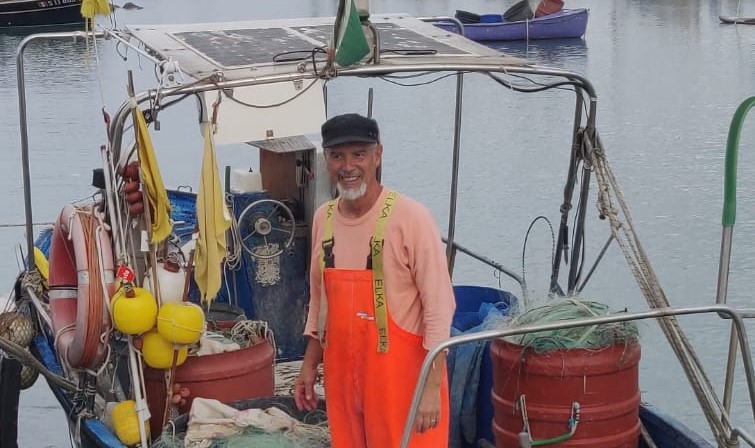
By Renato Galeotti, Small-Scale Fisher, Italy
Les voix de la mer est une série d'articles d'opinion qui amplifie les perspectives des pêcheurs artisanaux engagés dans la campagne "Pour une pêche équitable". Chaque mois, un pêcheur partagera son expérience du travail en mer, les réalités de la pêche artisanale dans son pays et ce qui doit changer pour assurer un avenir équitable et durable à la pêche en Europe.
My name is Renato Galeotti and I’ve been a professional fisherman in Vada since 2013. I don’t come from a family of fishermen and I don’t have a personal history tied to the sea.
Until 15 years ago, my life was divided between my job as a sales manager for a paper company and time dedicated to social and environmental initiatives – which have always been a major focus of my life. I’m part of the generation that, starting in the early 1990s, believed that the world could be changed from the bottom up through a series of small, everyday gestures.
In the early 2000s, I realized, with regret, that the world wasn’t going the way we’d hoped, and so I felt something had to change, both in my approach to environmentalism and, consequently, in my life. Thus was born the idea of caring for a common good—the sea—and of working with it closely, every day, joining the group of people who, more than any other, are confronted daily with the management of this common good: fishermen.
My wife shared this journey with me and together we decided to move to Vada, Italy, where she could continue her work as an elementary school teacher.
Integrating into the world of Vada’s fishermen wasn’t difficult, especially because many of the older fishermen “adopted” me and recognized my attitude toward the sea was the same respect they had learned from their parents and grandparents, who were fishermen. Indeed: respect for the environment isn’t an invention of third-millennium environmentalists, but was the norm when fishermen inherited the sea from their ancestors and passed it on to their children, confident that they would carry on their work.
Something broke in the relationship between fishermen and the sea, and this happened when fish stopped being considered a food source, primarily for the coastal community, and became a commercial product like so many others. Fishing effort increased rapidly, and the previous balance was disrupted. For this reason, from the beginning, I decided to reserve my catch for a select group of “fish eaters” who, together with me, would pursue a fishing project capable of respecting the rhythms and regenerative capacity of the sea. In other words: I don’t have customers but people who share a project by purchasing fish.
My years of social and environmental activism have allowed me to meet countless people driven by my own search for ways to impact reality, including through purchasing behavior, and these people quickly became the “reference community” for my catch. They are people who gather in groups and live in cities or towns not far from Vada. Three afternoons a week, I bring the morning’s catch, usually on Mondays, Wednesdays, and Fridays. There’s no choice: I divide the day’s catch among those who have pre-ordered, naturally taking everyone’s preferences into account. But the choice ends there; you can’t just specify one or two types of fish and receive only those.
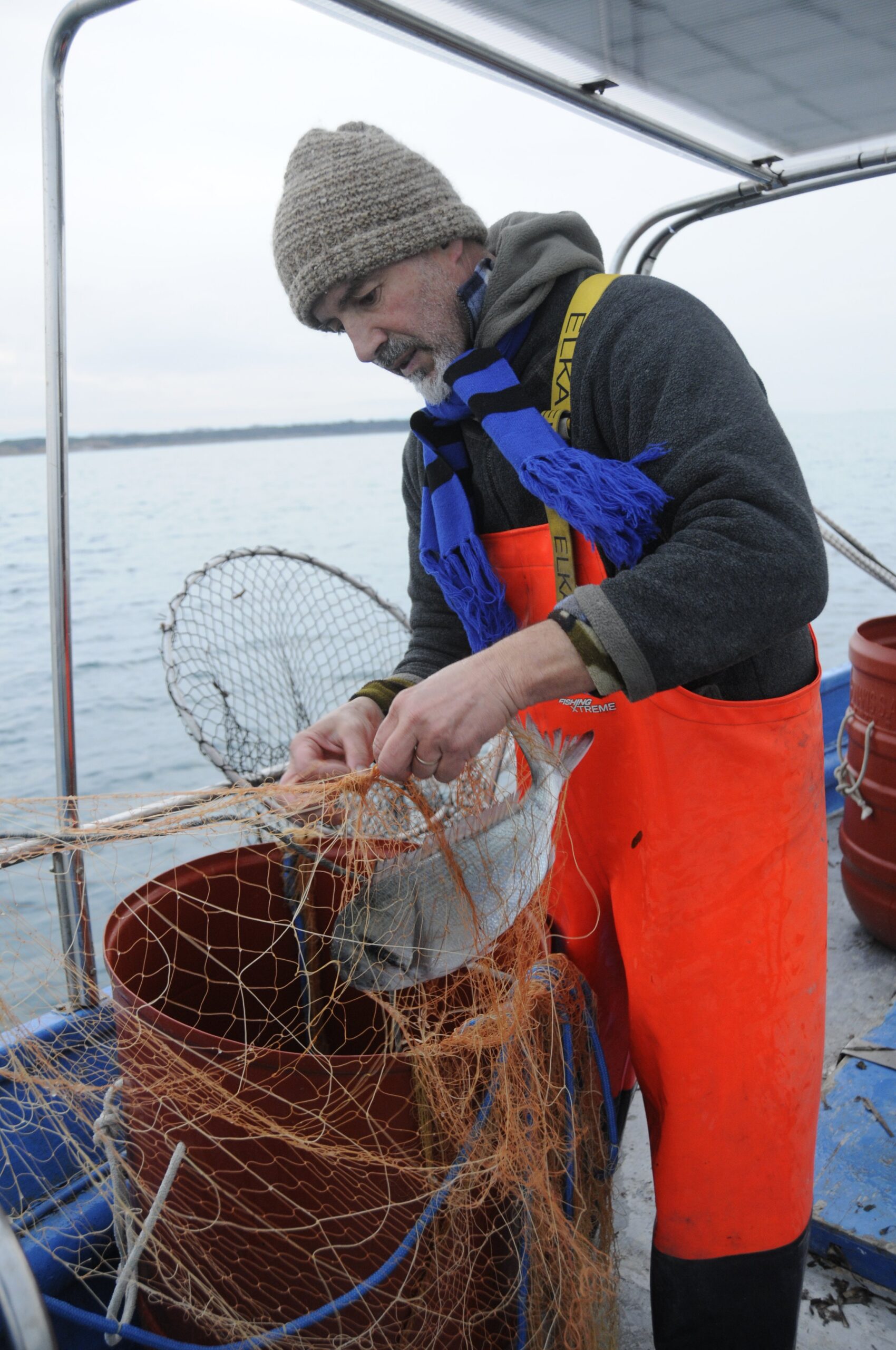
This approach worked; so, within a short time, I involved other fishermen from Vada in this project and began delivering their catch as well. Naturally, the project has very specific rules: we fish only with gillnets; we don’t use nets with small meshes, even though the law allows it; and a series of other measures reduce the impact on the sea. It’s worth noting that, in this way, I’ve never thrown away a single fish.
The selling price of my fish is lower than what is normally found on the fresh fish market and this is a small reward that those who participate in my project receive in exchange for giving up their choice.
This way of “being at sea” has certainly contributed to strengthening the bonds between us fishermen. In 2021, we decided to form an association that brings together all the fishermen of Vada and whose mission, among other things, is to raise awareness of our sea, the fishing techniques that have been passed down for centuries, and to foster respect for the environment. Every year, dozens, perhaps hundreds, of elementary school children come to visit us and learn about our work.
About a year ago, we established a network of associations called the “Vada Banks Protection Committee.” The stretch of coast off Vada has unique characteristics: it’s a sea rich in biodiversity that must be cared for and respected. The creation of this committee is certainly an important step, but it now needs to be implemented.
We are living through a difficult historical moment in which environmental struggles are being opposed by many stakeholders with different interests, which is why, now more than ever, we need to come together and unite our efforts without being divided by our differences.
The role of associations that combine the environment and daily work is very important and in particular I believe that the Make Fishing Fair campaign is a point of reference for all of us: finally we know we are not alone.
 French
  English
  Croatian
  Dutch
Dutch  German
  Greek
Greek  Italian
  Polish
  Spanish