

Die EU muss die Mitgliedstaaten in Bezug auf den kleinen Küstenfischfang strenger anstrengen.
Bildnachweis: Solfrid Sande
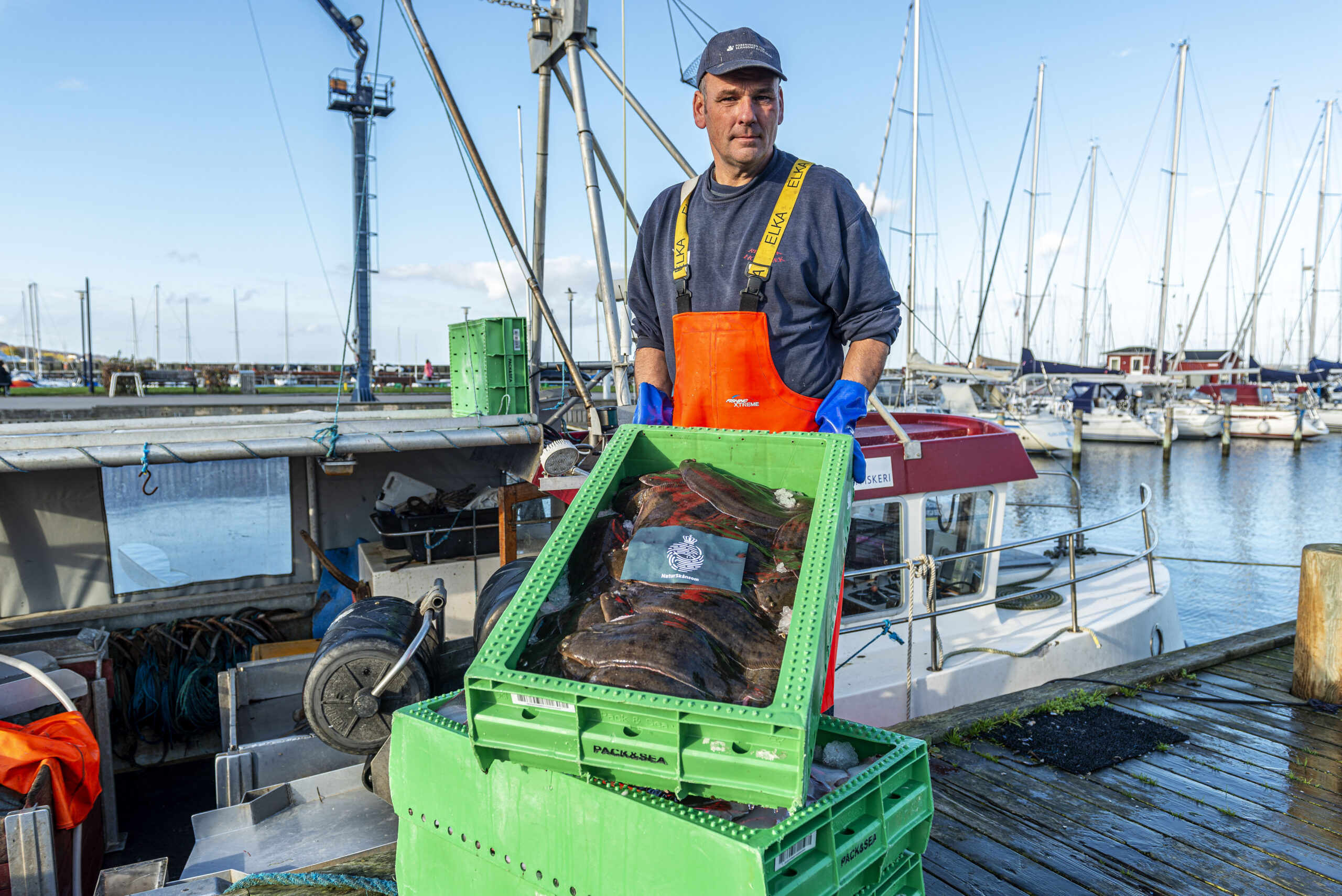
By Søren Jacobsen, Small Scale Fisher and co-founder and chairman of the Foreningen for Skånsomt Kystfiskeri Producentorganisation (FSK-PO)
My name is Søren, and I have been a fisherman for 29 years. It began with an interest in the sea and a lot of time fishing with a rod. I spent my first year on someone else’s vessel, then registered as a commercial fisherman and soon afterwards bought my own boat; which I still fish with today.
My vessel is just under ten metres, and I use low impact, passive gear. Everything I catch is for human consumption: Dover sole, plaice, turbot, brill, lemon sole, mackerel and edible crab. I fish in the northern Øresund in the Western Baltic Sea, an unusual stretch of sea where trawling is banned, and there is still plenty of life there.
Danish fishing has changed since I began my career, with vessels growing larger and larger and fishing every day of the week. The bigger boats have suffocated coastal fishing and the sea is under far more pressure, making things out of balance.
The changes are visible in our harbours as the large vessels bought out the small ones, fewer and fewer small scale fishing boats remain. In my own community, nine active vessels have become one full-time fisherman and one part-time, and I have seen discards increase immensely as activity shifted to trawlers.
My political work began in 2005, when I sat on the board of Gilleleje Fishermen’s Association. Denmark was starting to introduce a transferable quotas scheme, and as coastal fishermen, we asked many questions about what it would mean for us. We were told by the government we were scaremongering and told that big boats buying out small ones wouldn’t happen, and that rules would be put in place to stop this happening.
Unfortunately, we were right. The rules were drafted so poorly that it was possible for the large scale vessels to buy out the small vessels. A cap on the quotas one fisherman could own did exist, but because of the poor drafting and almost no oversight, people could still hold more than what was permitted.
I continued my work on the coastal fishing committee, which advised the Ministry of Food, Agriculture and Fisheries. In 2009 it concluded that the course set for Danish fishing meant the dismantling of small-scale coastal fishing (SSCF). We met strong opposition from the Danish Fishermen’s Association, so in response in 2014 three of us, myself included, founded an association exclusively for low-impact and coastal fishermen, Danish Small-Scale Fishermen’s Producer Organisation (FSK-PO in Danish). It became a producer organisation in 2019 and still exists to this day.
Ever since, we have worked to secure a dedicated small scale coastal fishing segment. Even with a clear political mandate, it is still not secure, because the system keeps stalling on changes. That is what we keep fighting for, and the fight isn’t over yet.
We need a distinct segment for small-scale coastal fishermen, with its own quotas and independent management. It must be decided politically and be irrevocable, so that a long-term strategy can be built on it. That strategy should be a ten-year plan, made at both national and EU level, with subsidies and quotas earmarked for a SSCF segment.
The EU must set higher demands on Member States for small scale coastal fishing and make sure they comply with its rules. Danish politicians must make sure decisions taken in Brussels are upheld, and the civil service must understand that what the EU and Parliament decide has to become reality. Strengthening Article 17 of the Common Fisheries Policy, and committing Member States to deliver on it, is one way to do that.
If we get this, I see a stable fishery in ten years, with a healthier sea and secure quotas. I see revitalised harbours, with more tourism and more life around them.
 German
 English
 Croatian
 Dutch
 French
 Greek
 Italian
 Polish
 Spanish